
The Power of Exercise
Here at Oasis Mental Wellness we look at the whole person to help you along your path to wellness. Mental health is a broad phrase that includes an array of concepts and conditions – whether we are thinking about the litany of known mental disorders or concepts centered around mental wellness like having a healthy mind that is resilient to stress – the phrase mental health encompasses the full spectrum of the state of the mind. Physical health is an equally broad term. We often are not as keenly aware of our health, physical or mental, until something is not quite right – and yet we all desire to be whole and well.
Though I am not going to make any bold claims about EXERCISE being a cure for any mental health condition or guarantee of mental wellness, it is true that exercise comes with vast benefits and implications for physical and mental health and that is what I want to unpack here. Just what does exercise do?
Before getting into the benefits of exercise though, let us consider the drawbacks of an inactive lifestyle. What are the real risks associated with living a sedentary lifestyle? To be clear, a sedentary lifestyle means that most of the time you are sitting or lying down and typically throughout the week get little to no exercise.

Cons of a Sedentary Lifestyle
Here are the downsides of such a lifestyle[1]:
Having a sedentary lifestyle is known to shorten longevity of life due to the cumulative impacts on physical and mental health over the lifespan – in the health literature the risk of shortened lifespan is called premature mortality. The total sedentary time per day for the average American in studies looking at this issue is around 7.7-8 hours/day or more. Some studies try to figure out if there are differences between total daily sedentary time that is fairly continuous versus intermittent (short sedentary bouts with intermittent physical activity) and at least one study has shown that if sedentary time is fragmented with intermittent physical activity there can be relative health benefits[4].
Overcoming Sedentary Lifestyle Risk
The good news is that this mortality risk can be offset even despite sitting for 8 or more hours/day if one engages in moderate-to-vigorous physical activity (exercise). The overall intensity of exercise can be conceptualized as the rate of metabolic energy demands on the body during exercise. A study published by the British Journal of Sports Medicine looking at almost 12,000 subjects from 2003-2016 in 4 different countries found that for those who had more than 12 cumulative sedentary hours per day, they had an increased mortality risk if there average amount of moderate-to-vigorous physical activity (MVPA) per day was less than 22 minutes[5]. MVPA is defined as physical activity that reaches a moderate to vigorous intensity of your maximum heart rate. Moderate physical activity is activity which induces a heart rate of 50-60% of your maximum heart rate (brisk walking, bicycling, dancing, hiking).


Vigorous physical activity produces heart rates that reach 70-85% of your maximum heart rate (jogging, aerobics, bicycling uphill, swimming fast)

Calculating Maximum Heart Rate
Maximum heart rate is found by taking 220 and subtracting your age.
Moderate-intensity exercises ranges from 65-80% whereas more vigorous exercise is 75-80% or higher.
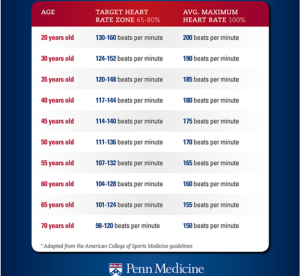
Figure 1. Table of Average Maximum Heart Rate and Range of Heart Rates for Moderate-Intensity Exercise for Different Ages. Exercise target heart rate: what you should know. Penn Medicine. Published March 14, 2018. Accessed March 14, 2024. https://www.pennmedicine.org/updates/blogs/heart-and-vascular-blog/2018/march/exercise-target-heart-rate
What the Experts Say
Considering what respected organizations say in comparison to most recent studies – The World Health Organization (WHO) recommends adults aged 18-64 should do at least 150 minutes of moderate-to-vigorous intensity aerobic physical activity throughout the week or do at least 75 minutes of vigorous-intensity aerobic physical activity throughout the week or an equivalent combination of moderate- and vigorous-intensity activity[6]. If all activity is of moderate intensity the WHO recommends doing at least 150-300 minutes of such activity weekly. Muscle-strengthening activities should be done involving major muscle groups on 2 or more days a week. CDC[7] and NHS[8] recommend the same amount of exercise for people 65 and above if they are generally fit and have no limiting health conditions. In case if we are restrained by our health, we can at least try to be as physically active as our abilities or the health conditions allow.
If we follow the WHO’s recommendations, it closely matches the current literature because 150 minutes per week is about 22 minutes of moderate-to-vigorous physical activity per day. The WHO recommends at least 75 minutes of more vigorous activity each week – in essence half of your moderate-to-vigorous physical activity – should be vigorous. Though the recent study referenced above suggests that even if all of your physical activity was of moderate intensity you would still have a reduced mortality benefit, there are more health benefits from doing more vigorous physical activity, as you are able.
So now that we have an answer as to what the science says is a good amount of physical activity for improved mortality and overall health benefits, let us dive deep into how this impacts mental health.
Benefits for the Brain
Recent research has suggested that the Exercise we do to improve our body also helps our brain. When we do high intensity exercise our heart rate increases, supplying more blood flow to the brain. The increased heart rate also increases our breathing, making us breathe harder and faster. As a result more oxygen is supplied in our blood stream, and more oxygen reaches our brain. This ultimately leads to neurogenesis, which is the production of neurons.
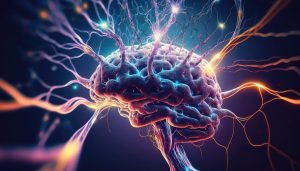
Our brain comprises billions of neurons with trillions of connections – and many psychiatric treatments like medications and psychotherapy are ultimately trying to target what we call neuroplasticity which is the brain’s ability to be adaptive by forming new neurons and new connections between existing neurons[9]. Exercise increases neurogenesis in the hippocampus, a brain area important for learning and memory. Additionally, exercise also influences the neurotrophins, which is the family of proteins that aid in neuron survival, development and function. This leads to greater brain plasticity and as a result better memory and learning. Neuroplasticity is implicated in overall mental health as well.
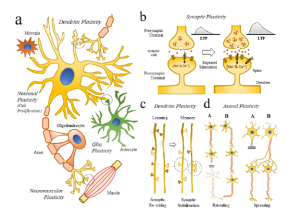
Figure 2. Changes in Cellular Structure Related to Neuroplasticity. Gotto, R. Molecular and microstructural biomarkers of neuroplasticity in neurodegenerative disorders through preclinical and diffusion magnetic resonance imaging studies. Journal of Integrative Science. September 2020. https://www.researchgate.net/publication/344435403_Molecular_and_microstructural_biomarkers_of_neuroplasticity_in_neurodegenerative_disorders_through_preclinical_and_diffusion_magnetic_resonance_imaging_studies
HPA Axis Benefits
Exercise also influences mental well-being by helping improve the functioning of the Hypothalamic-Pituitary-Adrenal (HPA) axis[10], which is known as the stress response system in our body. For more details on how this stress response system influences mental health, read the earlier blog posted about Polyvagal Theory.
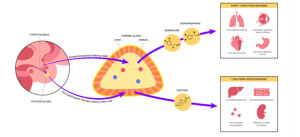
Figure 3. Hypothalamic-Pituitary-Adrenal (HPA) Axis and Stress Response – Short-term and long-term consequences. Guy-Evans, O. Hypothalamic-Pituitary-Adrenal Axis. Simply Psychology. October 26, 2023. Accessed March 1, 2024. https://www.simplypsychology.org/hypothalamic-pituitary-adrenal-axis.html
In essence, when the HPA axis is chronically over-activated, it can lead to increased blood pressure and higher cardiovascular risk, higher states of inflammation and a host of other chronic health risks. Exercise helps modulate the HPA axis so that it is not over-activated. Stress itself is connected to depression and anxiety – as both depression and anxiety are less heritable than other conditions in psychiatry – meaning that environmental factors and how things in the environment are perceived and processed – play a huge role in the development of depressive and anxiety disorders. So exercise, by modulating the HPA axis, indirectly can influence mood and anxiety states.
Exercise also modulates the secretion of major neurotransmitters in the brain, specifically Dopamine, Norepinephrine and Serotonin, which are linked to mood, anxiety and other conditions. The way that exercise does this is complex as there are many different receptors for each neurotransmitter and different brain regions with different pathways. It is also complex because the intensity and frequency of the exercise matters, but the overall impact of exercise on these neurotransmitter systems is positive[11]. This study reference suggests that the stress level induced by exercise intensity is likely a modulating factor that accounts for differential effects on the neurotransmitter systems – with greater feedback on the HPA axis with greater intensity exercise.
Other Benefits
Regular physical activity lowers the risk of developing cognitive impairment, such as dementia, including Alzheimer’s disease. This improvement from the exercise is for people with normal and also impaired cognitive health, including people with ADHD[12], schizophrenia[13], multiple sclerosis[14], Parkinson’s disease[15], and stroke[16].
Physical activity is also shown to improve sleep, and sleep is considered to be a basic vital sign in psychiatry because once sleep is poor there are so many downstream consequences for mental health. This relationship may be bidirectional though – with poor sleep making it harder to achieve desired levels of daytime physical activity – but the goal of improved sleep and physical activity are both good health goals for mental health[17].
Another commonly cited benefit of exercise found in studies that I will mention is exercise’s impact on self-esteem and body image[18]. This is not to ignore the harmful impacts of exercise fixation or over-exercise, which is a real thing some people experience, but those who exercise frequently without an exercise fixation do often reap the benefits of improved self-esteem and body image.

How Exercise Impacts Depression
Digging into the science is one thing – but let us actually consider outcomes for a specific mental health condition – DEPRESSION. A 2013 Cochrane systematic review of exercise’s effects on depression in adults[19] is worth considering. This review specifically looked at Randomized Controlled Trials where exercise was compared to standard treatment, placebo or no treatment. For the trials that compared exercise to no treatment or a control condition, there was a small effect in favor of exercise. Seven (7) trials compared exercise to psychological therapy, and found no significant difference – meaning that exercise had comparable clinical effects as psychological therapy. Four (4) trials compared exercise to pharmacological intervention and found no significant difference – meaning that exercise had comparable clinical outcomes as medication. Given the small number of trials comparing exercise to either therapy or medication, making conclusions should be done with caution. None of the studies noticed that exercise worsened depressive symptoms. As this writer has perused the medica literature the general consensus in the field is that exercise is as effective for mild to moderate depression as therapy and medication and can help alleviate symptoms of severe depression. Another cool thing about exercise for depression is that it is a RAAD – a Rapid Acting Antidepressant – with benefits for mood in just weeks as opposed to the 6-8 week time frame typical for most antidepressants.
There are even more mental health benefits from exercise than that already mentioned, but if we are in agreement about the importance of exercise, how do we practically implement this for those of us who do not already have a regular habit of the recommended amount of exercise?
Tips for Exercise
Here are some tips below:
Here at Oasis Mental Wellness the treatment is holistic and evidence-based. Exercise is an integral component of our health and should be incorporated as able to promote wellness. This is just one kind of activity though that can improve health, and at Oasis Mental Wellness we look at the entire person and consider all things that are evidence-based – including treatments like psychiatric medications, therapy, lifestyle, substance use, nutrition, and more. If you want to learn more about how you can improve your mental wellness or need help for a psychiatric condition, we look forward to learning more about you in detail to tailor recommendations specifically for you.
In Need of Professional Help for Exercise?
Specifically, if you are motivated to incorporate exercise into your life for physical/mental health reasons but feel you need some assistance in understanding what exercise you can do related to health conditions you have, you may need a referral to a Qualified Exercise Professional[20] (https://www.exerciseismedicine.org/eim-in-action/exercise-professionals/ ). Your psychiatric provider at Oasis Mental Wellness can refer you to such professionals.
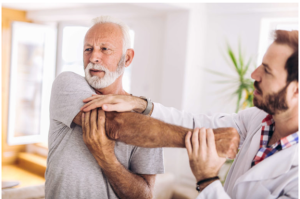
Figure 4. Exercise physiologist treating a patient. What can I do with a degree in Exercise physiology? Tiffin University. Accessed March 4, 2024. https://go.tiffin.edu/blog/what-can-i-do-with-a-clinical-exercise-physiology-degree/
For e.g., some patients may benefit from clinical guidance and monitoring from a cardiac and pulmonary rehabilitation program. These programs are staffed with Clinical Exercise Physiologists, who are allied healthcare professionals who use science to tailor, implement and supervise exercise and training programs for individuals with chronic health conditions. Some patients need individualized exercise programs for musculoskeletal or neuromuscular conditions before engaging in a broader physical activity program and this is where Physical therapists (PTs), Occupational therapists (OTs) and athletic trainers can help. There are also exercise programs for cancer patients. Look for qualified exercise professionals that have the NCCA Accredited Certification and/or the Exercise is Medicine (EIM) credential, which means that they have undergone special training and were certified to assist those with chronic diseases.
_______________________________________________________________________
[1] Medline Plus staff. Health Risks of an Inactive Lifestyle. National Library of Medicine Medline Plus. September 1st, 2017. Accessed December 22nd, 2023. (https://medlineplus.gov/healthrisksofaninactivelifestyle.html )
[2] Biswas et al. Sedentary time and its association with risk for disease incidence, mortality and hospitalization in adults: a systematic review and meta-analysis. Annals of Internal Medicine. 2015; 162(2):123-32. (https://pubmed.ncbi.nlm.nih.gov/25599350/)
[3] NIH staff. Strong association shown between being sedentary and dementia risk. National Institute of Health National Institute. October 26, 2023. Accessed January 5th, 2024. (https://www.nia.nih.gov/news/strong-association-shown-between-being-sedentary-and-dementia-risk#:~:text=Median%20duration%20of%20sedentary%20behavior,than%2010%20hours%20a%20day.)
[4] Ahmadi et al. Brief bouts of device-measured intermittent lifestyle physical activity and its association with major cardiovascular events and mortality in people who do not exercise: a prospective cohort study. Lancet Public Health. 2023; 8: e800-10. (chrome-extension://efaidnbmnnnibpcajpcglclefindmkaj/https://www.thelancet.com/action/showPdf?pii=S2468-2667%2823%2900183-4)
[5] Sagelv et al. Device-measured physical activity, sedentary time, and risk for all-cause mortality: an individual participant data analysis of four prospective cohort studies. British Journal of Sports Medicine. 2023. Vol. 52. (https://bjsm.bmj.com/content/57/22/1457)
[6] World Health Organization staff. Physical Activity. World Health Organization. October 5, 2022. Accessed January 5th, 2024. (https://www.who.int/news-room/fact-sheets/detail/physical-activity#:~:text=living%20with%20disability%3A-,should%20do%20at%20least%20150%E2%80%93300%20minutes%20of%20moderate%2Dintensity,intensity%20activity%20throughout%20the%20week)
[7] Centers for Disease Control staff. How much physical activity do adults need? Centers for Disease Control. June 2, 2022. Accessed January 5th, 2024. (https://www.cdc.gov/physicalactivity/basics/adults/index.htm)
[8] National Health Services staff. Physical activity guidelines for adults aged 19 to 64. National Health Services. August 4th, 2021. Accessed January 12th, 2024. (https://www.nhs.uk/live-well/exercise/exercise-guidelines/physical-activity-guidelines-for-adults-aged-19-to-64/)
[9] El-Sayes et al. Exercise-induced neuroplasticity: a mechanistic model and prospects for promoting plasticity. The Neuroscientist. 2018. (https://journals.sagepub.com/doi/full/10.1177/1073858418771538#:~:text=Figure%201.-,Model%20of%20neuroplasticity%20induced%20by%20chronic%20aerobic%20exercise.,%2C%20WMV%2C%20and%20neural%20activity.)
[10] Mahindru et al. Role of physical activity on mental health and well-being: a review. Cureus. 2023; 15(1):e33475. (https://www.ncbi.nlm.nih.gov/pmc/articles/PMC9902068/)
[11] Lin, Tzu-Wei and Kuo Yu-Min. Exercise benefits brain function: the monoamine connection. Brain Sciences. 2013; 3(1): 39-53. (https://www.ncbi.nlm.nih.gov/pmc/articles/PMC4061837/#:~:text=Dopamine%20(DA)%2C%20noradrenaline%20(,can%20work%20against%20neurological%20disorders)
[12] Dastamooz et al. The efficacy of physical exercise interventions on mental health, cognitive function, and ADHD symptoms in children and adolescents with ADHD: an umbrella review. eClinical Medicine. 2023; 62: 102-137. (https://www.thelancet.com/journals/eclinm/article/PIIS2589-5370(23)00314-0/fulltext#:~:text=Improvement%20of%20cognitive%20flexibility%2C%20inhibitory,functioning%2C%20and%20working%20memory)
[13] Girdler et al. Exercise as a treatment for schizophrenia: a review. Psychopharmacology Bulletin. 2019; 49(1):56-69. (https://www.ncbi.nlm.nih.gov/pmc/articles/PMC6386427/#:~:text=Effects%20of%20Exercise%20in%20Schizophrenia,speed%2C%20memory%20and%20executive%20functions.&text=Increase%20hippocampal%20volume%20and%20blood%20flow.&text=Stimulate%20neurogenesis%2C%20modulate%20synaptic%20plasticity.&text=Increase%20growth%20factors%20such%20as,involved%20in%20optimizing%20brain%20functioning.)
[14] Rademacher et al. Cognitive impairment impacts exercise effects on cognition in Multiple Sclerosis. Frontiers in Neurology. 2020. (https://www.ncbi.nlm.nih.gov/pmc/articles/PMC7902024/)
[15] Murray et al. The effects of exercise on cognition in Parkinson’s disease: a systematic review. Translational Neurodegeneration. 2014. (https://translationalneurodegeneration.biomedcentral.com/articles/10.1186/2047-9158-3-5#:~:text=the%20human%20disorder.-,The%20clinical%20studies%20showed%20that%20various%20types%20of%20exercise%2C%20including,executive%20function%20in%20PD%20patients.)
[16] Zhang et al. Effects of exercise therapy on patients with poststroke cognitive impairment: a systematic review and meta-analysis. Frontiers in Neuroscience. 2023. (https://www.ncbi.nlm.nih.gov/pmc/articles/PMC10117650/#:~:text=Studies%20have%20shown%20that%20exercise,motor%20impairments%20who%20have%20PSCI.)
[17] Kline, Christopher. The bidirectional relationship between exercise and sleep: implications for exercise adherence and sleep improvement. American College of Lifestyle Medicine. 2014; 8(6): 375-379. (https://www.ncbi.nlm.nih.gov/pmc/articles/PMC4341978/)
[18] Sani et al. Physical activity and self-esteem: testing direct and indirect relationships associated with psychological and physical mechanisms. Neuropsychiatric Disease and Treatment. 2016; 12:2617-2625. (https://www.ncbi.nlm.nih.gov/pmc/articles/PMC5068479/)
[19] Cooney et al. Exercise for depression. Cochrane Database of Systematic Reviews. 2013. (https://www.cochranelibrary.com/cdsr/doi/10.1002/14651858.CD004366.pub6/full?highlightAbstract=health%7Cexercise%7Cexercis%7Cmental)
[20] Exercise is Medicine staff. Exercise professionals expanding the reach of healthcare. Exercise is Medicine. Accessed January 12th, 2024. (https://www.exerciseismedicine.org/eim-in-action/exercise-professionals/)
© 2024 Oasis Mental Wellness. All Rights Reserved | Privacy Policy | Site Designed & Maintained by MRN Web Designs