
ADD/ADHD: The Truth vs. Myth
Around Diet and Supplements
Oasis Mental Wellness specializes in ADHD care. Having worked in psychiatry treating ADHD for years, I often get asked about how diet and supplements can help ADHD. I get these questions from patients or parents who are ambivalent about or know they want to avoid medications, but I also get these questions from people who just want to have a good understanding of what impacts their ADHD symptoms and what could possibly benefit them.
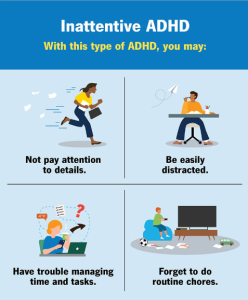
First off, let’s define ADHD. The nomenclature has changed such that “ADHD” which stands for Attention Deficit Hyperactivity Disorder, is essentially an umbrella term that comprises all the subtypes of ADHD. The subtypes include ADHD inattentive type where there are primarily inattentive symptoms, and also refers to ADHD hyperactive type, ADHD impulsive type, and ADHD combined type. ADHD combined type includes inattentive with other symptoms (hyperactive and/or impulsive) and is the most common form of ADHD. 95% of cases of ADHD include either primarily inattentive symptoms or inattentive symptoms with hyperactivity or impulsivity – so inattentiveness is a big part of the presentation of ADHD[1]. This is important to keep in mind when we are discussing how possibly diet and supplements can impact ADHD symptoms.

Diet: What You Put in Makes a Difference
This is an overwhelmingly huge topic, but young, developing brains and adult brains need adequate nutrition for optimal cognitive functioning. This comprises not just basic caloric intake but also the contents of caloric intake. For e.g. when the body is at rest and its work only includes breathing, digesting and keeping warm – the brain uses 20-25% of the body’s overall energy, mainly in the form of glucose[2]. For the average adult this translates to 350-450 calories per day. Children tend to need to consume more of the body’s energy and this can be as high as 60% of the body’s overall energy. The brain itself is only 2% of our overall body weight but the cognitive demands of the brain are energy-intensive!
Most of us though are getting adequate calories. What about the content of our diet? What the literature review reveals is that poor diet and eating habits do not cause ADHD. There is no substitute for medication and behavioral therapy to effectively manage inattentive, impulsive and other symptoms of ADHD. That being said, for those who already have ADHD, poor nutrition can lead to a worsening of ADHD symptoms[3].
As far as what diet should be encouraged, it is best to take a whole diet approach and pursue a diet that is balanced with whole grains, fruits, vegetables and proteins and is limited in refined, processed ingredients and high fat content.
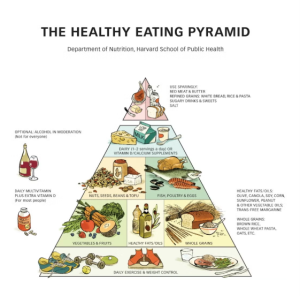
This approach is good for optimal brain functioning and is negatively associated with ADHD symptoms. Unfortunately, the Western diet is characterized by a high intake of refined carbs, sugars, sodium, total and saturated fats, lower intake of omega 3s, fiber and folate.

It is not a surprise then that the Western diet shows a higher prevalence of ADHD even after controlling for confounding variables. Consider that this is complex and this association may include bidirectional components, as those with ADHD may make poorer dietary choices.
Healthy diet includes protein like lean meats, eggs, beans, nuts, soy, and dairy – which are used by the body to make neurotransmitters, which help to increase alertness. For e.g. a morning meal high in protein increases your brain’s tyrosine levels which helps your brain produce the neurotransmitters Norepinephrine and Dopamine, contributing to mental alertness. Keep in mind though that increasing mental alertness is not the same as treating ADHD – if that were the case then we could tell ADHD patients to simply drink coffee to treat their symptoms. Proteins also help to regulate blood sugar, but know that claims that fluctuations in blood sugar contribute to hyperactivity symptoms do not have clear data in the literature. According to ADDitudeMag: eating a protein-rich breakfast can reduce irritability and restlessness side effects from stimulant medications, but this is not a substitute for ADHD treatment[4].
For carbs a healthy goal would be to eat 25-30 grams of high fiber, low glycemic index carbohydrates. For e.g. eat fruits instead of drinking fruit juice.
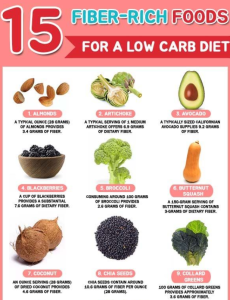
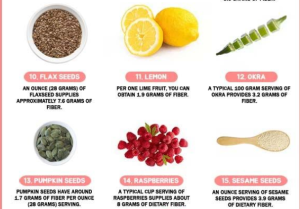
A special clinical tip for those with ADHD though is that fruits with a high acidic content can affect the absorption of ADHD medications like stimulants and cause them to clear more quickly from your body – so maybe think about that when you are eating an orange or grapefruit. Another clinical tip is that you can use this knowledge of acidic fruits and stimulant medication to your advantage – if you feel you have a prolonged crash as your stimulant is wearing off later in the day, eat a high acidic fruit or drink orange juice to help the crash pass more quickly. Other examples of healthy carbs include vegetables, milk, yogurt (without added sugar), cereals and grain (again, high fiber!).
Healthy fat intake is important with the whole diet approach. There is a correlation between low levels of Omega 3’s and ADHD. In the same way that the brain uses a lot of sugar for energy, the brain is comprised of high proportions of lipids (fats) – for e.g. the myelin sheaths that cover the axons of neurons that help transmit signals quickly from one neuron to the next have a lipid content of 70-85%![5]. And your brain has billions of neurons with trillions of connections!
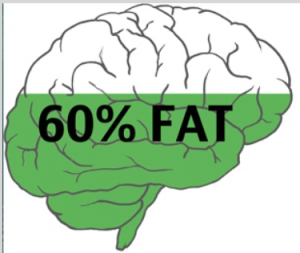
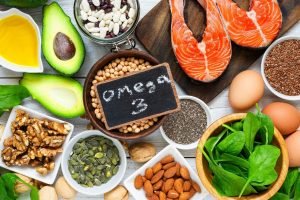
Basically, healthy fats consist of Omega 3’s and unhealthy fats are saturated fats and trans fats. Natural sources of Omega 3’s include fatty fish like salmon, mackerel, herring, oysters, sardines, anchovies as well as flaxseed, chia seeds, walnuts and soybeans. For those that prefer to take the supplement route, see more on supplements below[6].
As a general rule of thumb it is also important to stay well hydrated as poor hydration affects cognition. Caffeine and alcohol lead to dehydration. Many children and adults do not drink enough water throughout the day. A way to calculate how much water you should be drinking is to drink half your weight in ounces. For e.g. if you weigh 130 lbs, you should be drinking 75 oz per day. If you are significantly overweight, do not drink more than 120 oz per day. Athletes should make sure to replenish themselves with electrolytes.
Tell me more about sugar – It is established that short-term consumption of sugar is not associated with ADHD symptoms[7], but some theorize that chronic overconsumption of sugar may influence Dopamine (DA) regulation and therefore may be an etiological factor in ADHD[8]. The American Academy of Pediatrics recommends limiting sugar to less than 10% of total calories per day or less than 25 added grams of sugar per day for children ages 2-19 years old[9]. A good approach to try to achieve this is to remove or limit high sugary drinks and other sources of empty calories and instead have sugar come from natural sources, like fruits.
Other tips to consider is that when buying fruits and vegetables, try to avoid pesticides, specifically organophosphates – as they may be linked to ADHD[10].
What About Special Diets?
Both casein-free and gluten-free diets have been studied and show inconclusive results. Elimination diets should be avoided as there is scant evidence for effectiveness and these diets can lead to nutritional deficiencies. As one example, there are oligoantigenic “few foods” diets where the focus is to eliminate potential allergens, including wheat, dairy, certain meats, carbs, fruits, vegetables – these food restrictions remain in place for 2-5 weeks in which the child is only able to eat a few hypo-allergenic foods and then a broader range of foods are slowly re-introduced. Although some studies show a subpopulation of children having an excellent response[11], the mechanism of action to explain this effect is unclear and results from other studies are mixed.
The research is mixed as well when it comes to broad-spectrum micronutrients (BSM) – which are basically supplement preparations that contain a wide range of vitamins and minerals that the body needs in small amounts.
Some recent studies of BSM showed significant improvements in behavioral functioning, including core ADHD symptoms and/or emotional regulation; most of these individuals studied were medication-free[12]. How strong is the evidence? This is a good e.g. of an approach that would not likely cause harm and may help, so even if the evidence is not clear as being very strong, it at least would not potentially lead to nutritional deficiencies like elimination diets.
Supplements, Supplements, Supplements…
Finally, we are on the topic of supplements. The supplement that carries the most evidence and promise for helping with ADHD symptoms is Omega 3’s. A meta-analysis shows in a majority of studies that Omega 3’s provide benefits for hyperactivity, impulsivity, attention, visual learning, word reading and working/short-term memory[13] . Omega 3 supplements have EPA and DHA and you want to choose an Omega 3 supplement with more EPA than DHA. It can take about 3 months of daily supplementation to see the full effect and the effect will not be as pronounced as stimulant medication. Using Omega 3s may help someone be able to lower the dose of their ADHD medication. Also, a plus is that Omega 3s are good for cardiovascular health!
If someone has low vitamin B6, then supplementation can help with alertness due to increasing the natural production of dopamine. Low levels of B6 correlate with brain fog, decreased mental alertness. The B6 component of B complex supplement should be 100-300 mg/day.
When it comes to zinc, low levels of zinc are correlated with inattention. Zinc may also help to augment the effects of Methylphenidate, as zinc increases Methylphenidate affinity to the Dopamine transporter. A meta-analysis suggests that there may be a connection between ADHD and declining zinc levels and it may be reasonable to screen for zinc levels in those with ADHD[14]. Zinc supplementation should be up to 30 mg/day.
Iron is used to make Dopamine in the body and low levels of iron are correlated with more severe ADHD symptoms and other cognitive deficits. In the case of iron deficiency, iron supplementation should be pursued – under the supervision of a medical provider.
Magnesium can have a calming effect on the brain but does not directly treat ADHD symptoms. For those with comorbid anxiety though, this could be a beneficial add on. Typical dose is 200 mg/day and this writer recommends centrally acting, more readily absorbed formulations like Magnesium Citrate.
Ginkgo[15], ginseng[16], and Rhodiola rosea (stimulates the Reticular Activating System and elevates NE, DA and 5HT)[17]may have some cognitive activating effects; may lead to less distractibility and less impulsive behaviors.
There is no reliable evidence for probiotics and ADHD symptoms.
I hope this blog by Oasis Mental Wellness has proved helpful to some. If you are in need of expert care for ADHD or want an evaluation to find out if you have ADHD, please consider booking an appointment!
References
© 2024 Oasis Mental Wellness. All Rights Reserved | Privacy Policy | Site Designed & Maintained by MRN Web Designs