The Importance of Perinatal Mental Health

The Personal Connection
As a woman and mother of three children, including a precious newborn baby as the third addition to our family as of June 2025, I (PA Lydia Ramos) am reflecting on my motherhood journey with all the rewards and challenges it brings. As I write this I am enjoying the precious moments with my baby girl while navigating sleep deprivation, emotional ups and downs and various life stressors. It is hard to adequately describe in words the joy I have as a mother, but it is no easy feat to bring a human being into this world and parent little ones, while navigating changes in biology, schedules, career, finances, relationships, etc…As a psychiatric provider I have developed a growing interest in recent years to become more equipped through training to develop a more nuanced and expert understanding of perinatal mental health so that I can best treat this unique patient population – a population I myself can identify with.
Female Reproductive Physiology and Mental Health
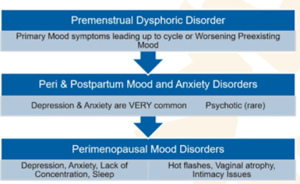
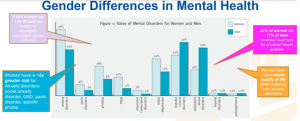
Females (as in those born biologically female) comprise about 50% of the world adult population, and the sheer magnitude of their contribution to society cannot be understated. Yet despite this, girls and women have often been under-represented in research, despite clear biological differences between males and females. These research gaps are increasingly being addressed in recent decades, including in the realm of mental health. Women deserve a special focus in mental health as the biology of being female has direct impacts on mental health trajectories, which specifically correlate with the onset of menses through perimenopause, as a result of fluctuating sex hormone levels[i]. It is notable that depressive and anxiety disorders in boys and girls are approximately equal until girls reach puberty/menses – and from menses through perimenopause the rates of depressive and anxiety disorders amongst females are significantly higher than their male counterparts[ii]. Puberty, menstruation, infertility treatment, pregnancy, postpartum and menopausal transition are all examples of where fluctuating sex hormones can have specific impacts on the experience of girls and women, both physically and psychologically.
At Oasis Mental Wellness expert psychiatric care is available for all ages and genders, but Women’s Mental Health is a special area of focus at this practice and specifically, PA Lydia Ramos has a passion for perinatal mental health. Perinatal mental health encompasses women’s mental health from conception through 2 years postpartum.

Entering motherhood is the most significant biological event that happens in a woman’s life causing profound and permanent changes to the brain[iii], and though some changes are temporary, the biological changes influence various areas of the brain that have an impact on mental health. In fact, mental health disorders are the most common complication of pregnancy and contribute to the top reasons for maternal death in the perinatal period.
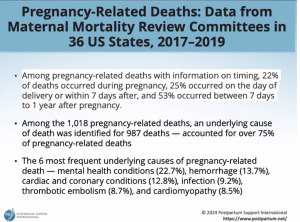
Less than 30% of women who screen positive for perinatal mood disorders receive treatment and less than 6% of women follow through with treatment when referred.
This is where Oasis Mental Wellness enters the gap in care to help increase access to quality perinatal mental health. There are special considerations for the perinatal population, and having a provider who understands the unique biological, psychological and psychosocial stressors, as well as being able to offer tailored treatment, is the kind of quality care that women throughout the perinatal period deserve.
Risks of Untreated Mental Health Symptoms
Often when women are presenting to me for perinatal care, the focus is on the baby and how medications will affect the baby, whether pregnant or breastfeeding. What is often overlooked and needs to be included in any quality risk vs. benefit discussion, are the risks of untreated mental health symptoms in the mother.
For example, untreated depression in pregnancy is associated with significantly increased risks for pre-term birth, low birth weight, fetal growth restriction and pre-eclampsia. Even if the outward expression of emotions from the mother seems reasonable, higher perceived maternal stress, as seen in depression, results in elevated cortisol (stress hormone) levels – and the elevated cortisol can result in epigenetic changes to the fetal brain which downstream can lead to increased emotionality, impaired learning and motor development in the child[iv]. Perinatal women dealing with a mood disorder tend to have decreased energy, poorer nutrition, increased self-medicating habits, poorer compliance with medical care including prenatal/postpartum visits, more negative experiences with breastfeeding and are less likely to use follow safe practices for the baby such as using a car seat or placing baby on the back to sleep.
Did you know that 1 in 13 women develop depression while pregnant and
1 in 7 postpartum women suffer from depression?
Discontinuing medications like antidepressants during pregnancy results in relapse rates 5 times higher than women who continue antidepressants – with all of the above named risks of untreated illness impacting the mother and baby.

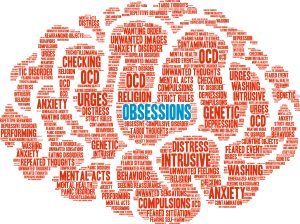
Another prevalent issue in pregnancy and postpartum is anxiety – approximately 1 in 5 women meet diagnostic criteria for an anxiety disorder and 1 in 20 meet criteria for 2 anxiety disorders in pregnancy and the postpartum period[v]. Untreated perinatal anxiety increases risks for perinatal depression and pre-term birth as well as conferring increased risk for other adverse obstetric and child outcomes. Perinatal Obsessive Compulsive Disorder (OCD) has a 2.9% prevalence in pregnancy and a 7% prevalence postpartum. OCD includes symptoms of obsessions and/or compulsions, with common obsessions occurring as intrusive thoughts with common themes during the perinatal period around fears of going crazy, fears of contamination, fears of others taking care of the baby, fears of something bad happening to the baby, fears that the mother herself will harm the baby, fears the baby will stop breathing with a compulsion to watch the baby sleep. Untreated OCD can cause significant impairment and distress to the mother with conferred risk to the baby. Similarly, untreated bipolar disorder and psychosis in pregnancy significantly increases risk to the mother and baby.
Benefit of Treatment vs. Risk
At Oasis Mental Wellness a holistic approach to care is taken – meaning that treatment is through the lens of a biopsychosocial framework. Medications are often a 1st-line treatment for moderate to severe mental health symptoms, whether depression, anxiety, OCD, bipolar disorder, etc…but that does not mean that medications are the only treatment that is included in discussion and treatment planning.
Therapy is a critical and helpful tool for many perinatal women that is free of the risks of medication exposures to the baby, and at Oasis Mental Wellness we strive to have a robust referral system for making sure patients get access to quality therapy as needed. Various therapeutic modalities can be helpful depending on what symptoms a woman is dealing with. What is most evidence-based for postpartum depression includes therapies such as Interpersonal Therapy (IPT) that explores the unique adjustments in roles and relationships during the transition during the postpartum period. There are other therapies though that can provide benefit for postpartum depression which are not limited to but include cognitive-behavioral therapy (CBT), partner-assisted interpersonal therapy, couples’ therapy, parent and child therapies to increase attachment and bonding. For OCD, Exposure Reponse Prevention (ERP) therapy is a 1st-line treatment. For trauma-related symptoms there are many therapies including Eye Movement Desensitization and Reprocessing therapy (EMDR) as well as CBT-Trauma focused therapy, Exposure therapy, Narrative therapy, and more. Even if Oasis Mental Wellness does not provide these therapies at the time of your treatment with us, we will make sure you get connected.

Lifestyle factors including nutrition, exercise, quality social connection, stress management, self-care, spiritual practices, finding purpose and meaning – these are all things that are important to achieve wellness and are also part of the discussion with your treatment provider. How can you create more margin in your schedule and more balance in your life? Can you find more ways to be out in nature that work for your preferences and schedule? What are things you personally enjoy that you could incorporate more into your life? Are there ways you could advocate more for yourself to get the support and connection you crave?


Then there is of course the consideration of medication and this is where talking to an expert within psychiatry to have a detailed risk vs. benefit discussion is valuable. There are many fears women have around taking medication while pregnant or breastfeeding, but many psychiatric medications are generally safe with minimal risk to the mother and baby – and remember – that the risks are weighed against the risk of untreated illness. For women with mild symptoms who feel that through lifestyle interventions and/or therapy, have minimal stress, medications are not necessarily recommended. The threshold where a recommendation for medication becomes more clear-cut occurs when a woman is experiencing more significant symptoms of moderate to severe severity.
Let’s consider a common class of medications that is 1st-line treatment for depression, anxiety, OCD and trauma-related symptoms – antidepressants.
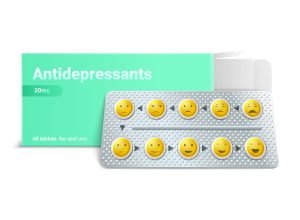
For years there have been some common trends in concerns about antidepressants, that through research have been shown to be unfounded through evidence or have been found that when risk exists it is of limited significance. There have been concerns for example that antidepressants contribute to low birth weight, pre-term delivery, poor neonatal adaptation, persistent pulmonary hypertension of the newborn, cardiac malformations and Autism. For pre-term birth, the risk according from antidepressants according to some studies, is delivering 5-7 days early, which is around the same risk as continuous untreated depression – however, some studies show no increased risk for pre-term birth from antidepressants. The risk for low birth weight from antidepressants confers a risk of having a baby weigh 3.4 oz less than without according to some studies (evidence is mixed with some studies not showing this association), but this risk again is similar to untreated depression. Extensive studies have been done using sibling controls, propensity matching and examining environmental exposures when examining antidepressants and Autism as older studies were not carefully conducted to control for confounding variables – and these newer studies have found that there is no association between antidepressant use in the mother and Autism in her offspring[vi]. There is a wealth of data that perinatal specialists know and can share with you as a patient on your journey to be fully informed and make the best decisions for you and your baby.
What is a Perinatal Mental Health Certification?
At Oasis Mental Wellness Physician Associate (PA) Lydia Ramos has a national Perinatal Mental Health certification (PMH-C). Acquiring this certification requires years of experience treating perinatal patients with an employer documenting to the agency that provides the certification that the provider has in fact treated perinatal patients. Other requirements include acquiring specific training that earns 20 hours of Certified Medical Education (CME) credits specific to perinatal mental health, along with passing a national certification exam. The certification is good for 2 years and has to be maintained by acquiring 12 hours of CME in relevant perinatal topics within every 2-year period past certification[vii]. Lydia Ramos acquired her certification through Postpartum Support International (PSI).
Resources
As a practice that wants to equip patients with information and provide high quality care, it is important to share resources that can provide further valuable information. Postpartum Support International (PSI) is an incredible resource for perinatal patients. PSI has a help line (800-944-4PPD) that is available 8am-11pm EST wherein messages are returned within 2-3 hours (it is not a crisis line) – this help line offers support, information, resources and referrals. Support on the help line is available in English and Spanish and other languages upon request. There are also PSI Support Coordinators located in the U.S. and internationally along with forums for chatting with experts and online support groups for many topics, to name some but not all of the resources available through PSI. You can look at the PSI Provider Directory to find perinatally-trained professionals in your area.
There is also a national Maternal Mental Health Hotline (1-833-TLC-MAMA) approved by Congress in 2020 that operates 24/7 365 days a year. This hotline is Staffed by licensed mental health clinicians, healthcare, certified peer specialists and childbirth professionals with PSI operating the contractor for the hotline.
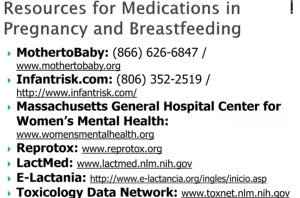
Finally, please see below helpful and evidence-based resources for perinatal patients considering medications. Massachusetts General Hospital also has plenty of other resources and information for perinatal patients.
Thank you for taking the time to read this blog. Oasis Mental Wellness looks forward to continuing to serve the perinatal population with compassionate and high-quality care.
References
[1] Burk VK, et al. Mood disorders in women: focus on reproductive psychiatry in the 21st century. Can J Clin Pharmacol. 2009;16(1):e6-e14.
[ii] Kessler RC, et al. Lifetime prevalence and age-of-onset distributions of DSM-IV disorders in the National Comorbidity Survey Replication. Arch Gen Psychiatry. 2005;62(6):593-602. doi: 10.1001/archpsyc.62.6.593.
[iii] Brunton PJ, Russell JA. The expectant brain: adapting for motherhood. Nat. Rev. Neurosci. 2008;9(1):11-25. doi:10.1038/nrn2280.
[iv] Sayres Van Niel, M. & Payne, J.L. Perinatal depression: a review. Cleveland Clinic J Med. 2020;87(5):273-277. https://doi.org/10.3949/ccjm.87a.19054.
[v] Fawcett EJ, et al. The prevalence of anxiety disorders during pregnancy and the postpartum period: a multivariate bayesian meta-analysis. J Clin Psychiatry. 2019;80(4):18r12527. doi:10.4088/JCP.18r12527.
[vi] Suarez EA, Bateman BT, Hernandez-Diaz S, et al. Association of antidepressant use during pregnancy with risk of neurodevelopmental disorders in children. JAMA Intern Med. 2022;182(11):1149-60. doi.10.1001/jamainternmed.2022.4268.
[vii] Certification in perinatal mental health. Postpartum Support International. Accessed June 6th, 2025. (https://postpartum.net/professionals/certification/)
© 2024 Oasis Mental Wellness. All Rights Reserved | Privacy Policy | Site Designed & Maintained by MRN Web Designs